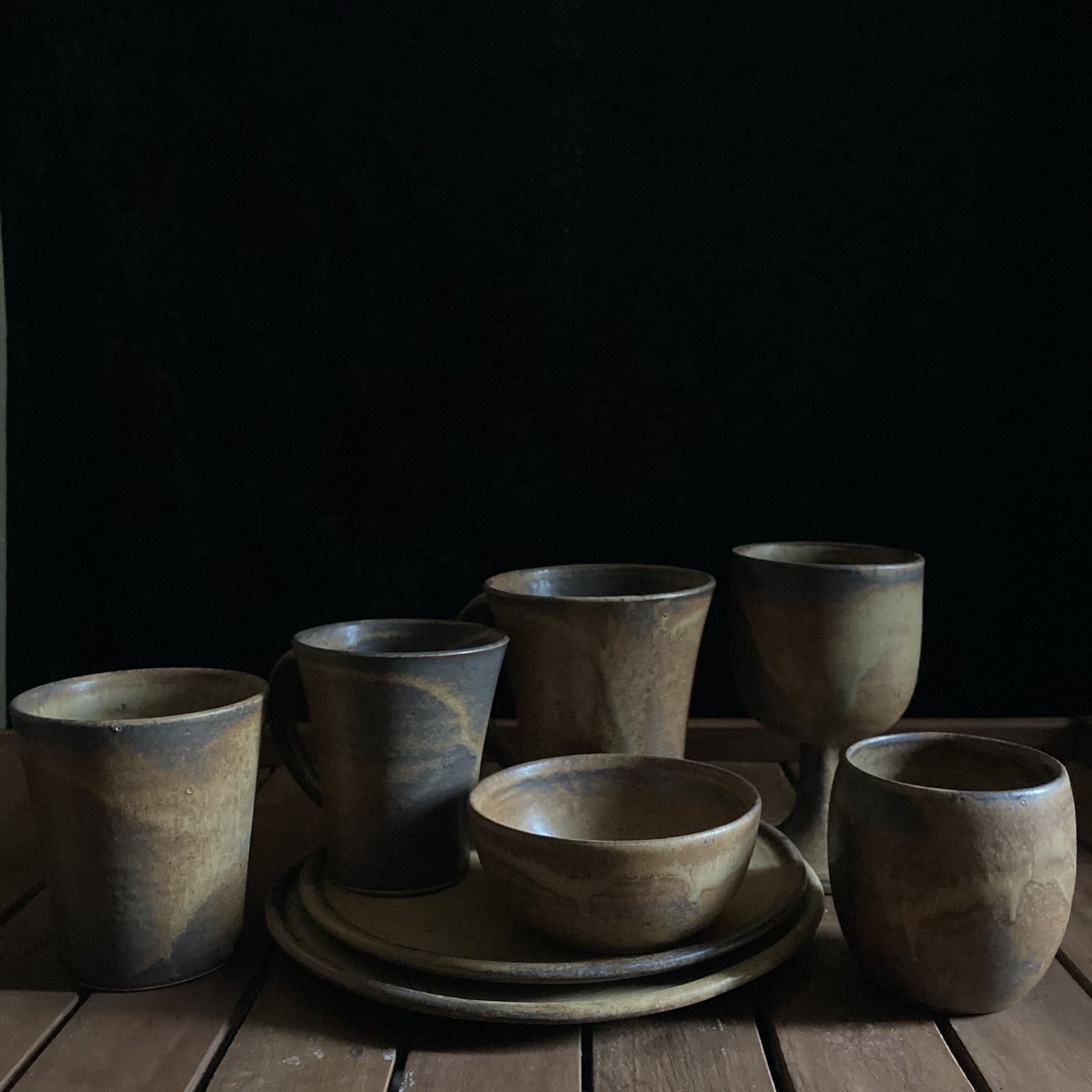
The short answer. Choose cup sizes from your recipes, order two to three cups per seat for each hot drink size plus about ten percent spare, and pick one material for the whole counter. For handmade Philippine stoneware made for service, see AWIS for cafés and restaurants.
Start from the menu
Write down every drink and its volume, including foam. Then group them. Most cafés manage with three cup sizes: a small cup for espresso drinks and cortados, a medium for flat whites and cappuccinos, and a large for lattes, long blacks and pour-over.
- Espresso: 60 to 90 ml.
- Cortado, piccolo: 120 to 150 ml.
- Flat white, cappuccino: about 150 to 250 ml.
- Latte, long black, pour-over: 250 to 350 ml or more.
How many to order
Count seats, not tables. Two to three cups per seat for each hot drink size lets the dishwasher keep up at peak. Add about ten percent for breakage, and keep a few spares of each form in the back.
Stoneware or porcelain
Porcelain is thin, white and consistent. Stoneware is denser and heavier, with glaze that varies from piece to piece. It feels warm in the hand and photographs well. Both are high fired and suited to service. What matters most is that the forms stay consistent, so replacements match.
Plates and bowls
Choose plates by the plating, not the menu name: a 26 to 28 cm dinner plate, a 20 to 22 cm salad or dessert plate, and bowls for soup, pasta and rice. Fewer forms used across many dishes is easier to stack, wash and replace.
Where to buy
Home stores and marketplaces carry mass-produced cups. Local potters take commissions. AWIS supplies handmade Philippine stoneware for service: mugs and cups from 250 to 480 ml, bowls, plates, pitchers and teapots, with trade pricing on enquiry. For independent cafés, see handmade cups for coffee shops. See The Table and the house mugs.